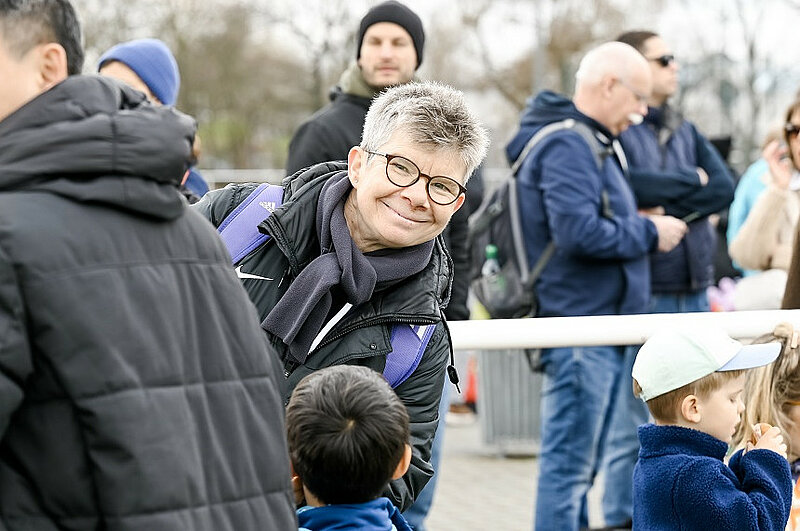
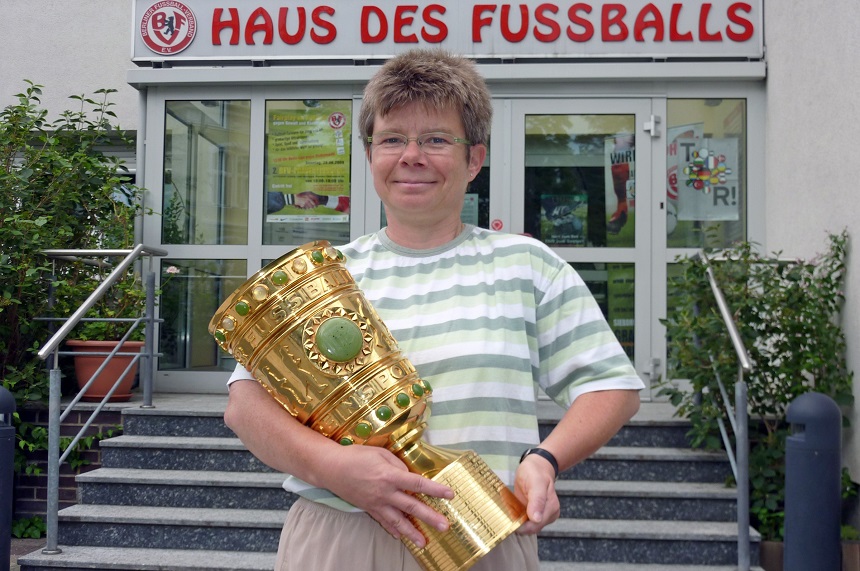
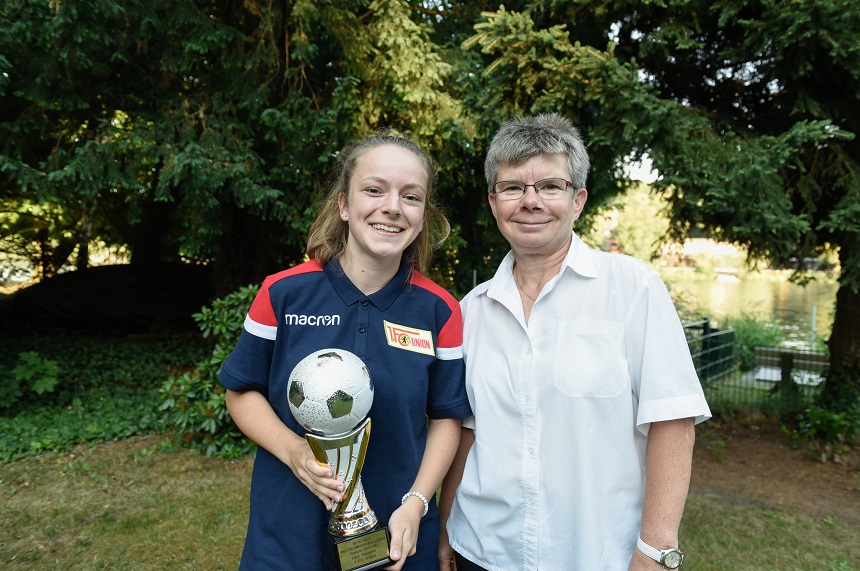
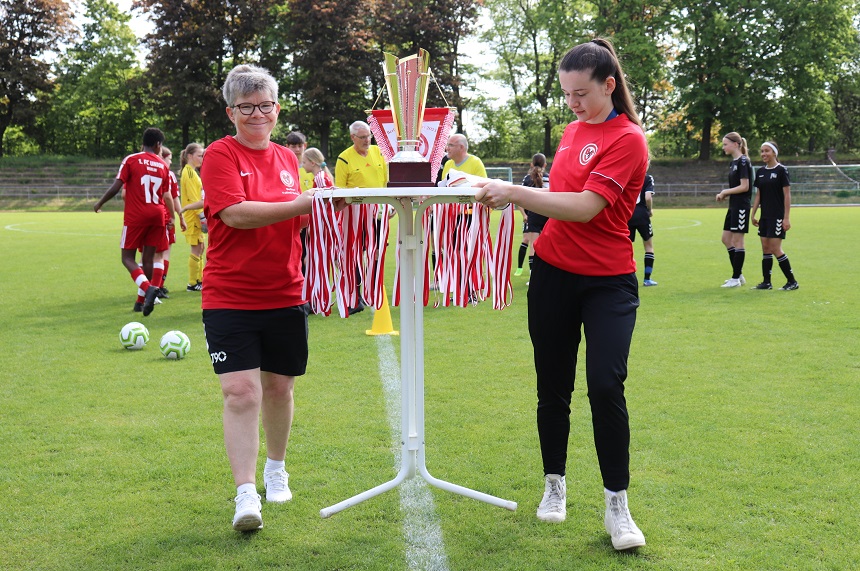
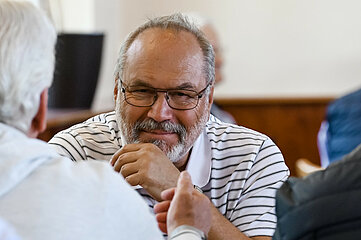
Kathrin Nicklas worked for the Berlin Football Association for 35 years. Photo: Sandra Ritschel
/Our association
"Standing still is a step backwards"
After 35 years of full-time work for the Berlin Football Association, Kathrin Nicklas took her well-deserved retirement in spring 2025 - albeit only part-time, because she couldn't do without soccer after all! In this interview, we spoke to our Events & Social Responsibility employee about her inexhaustible passion for the game and the development of women's soccer, which she shaped as a player for the GDR national team, coach of 1. FC Union Berlin and on trips with the German national team.
Hello Nicki, you've been working for the BFV since 1990 and recently retired part-time, which means 35 years with the same employer. Why did you never think about stopping?
Two of my strengths are my sense of duty and my reliability - qualities that are also very important in sport. I started playing athletics at the age of six and learned these qualities early on. Sport therefore played an early role in my private life. It soon became part of my professional life too, when I worked for the German Fencing Association of the GDR for ten years. Sport has always been with me and was and is an important part of my life, and if you can combine your hobby and profession, it's a win-win situation. Life is much more relaxed now, although many people, including myself, wouldn't have believed that I could reduce my workload so quickly.
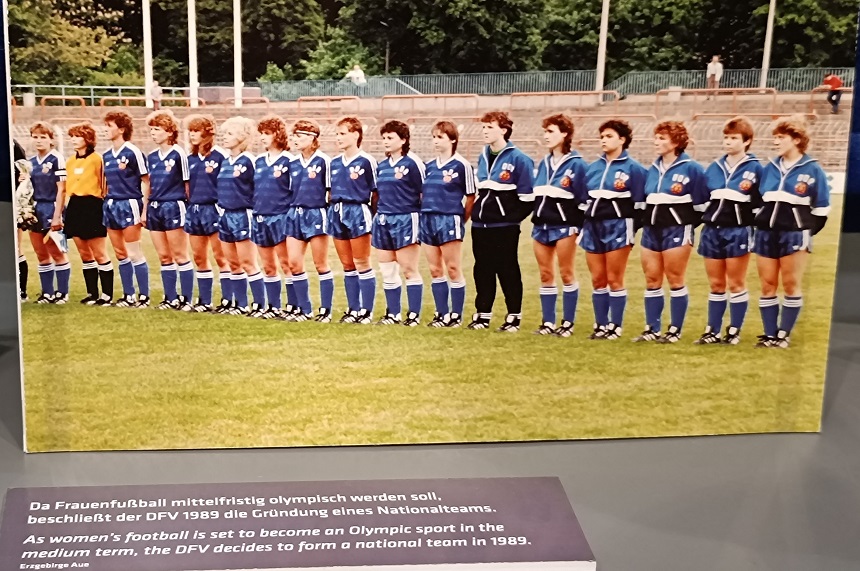
In 1990, Kathrin Nicklas (2nd from right) was part of the national team for the only GDR women's international match. Photo: private
In 1990, you were in the squad for the only international match of the GDR women's national team against the ČSFR in Potsdam. You once said that you were impressed by how much interest there still is in this topic today. What do you think fascinates people about this story?
I was actually impressed again at the end of April when I went to the premiere of "Mädchen können kein Fußball spielen" and saw this great film by Torsten Körner, as well as meeting the protagonists who were there and with whom I have been in close contact since we were together. The fascination with the subject is certainly also due to the time: The time of reunification in 1990 and the GDR, which actually no longer existed and then put on this one and only international match. I can only confirm what the players involved, Doreen Meyer and Heidi Vater, say in this film: we were proud to have been there, both in preparation for the training courses and, of course, at the game in Babelsberg.
As a selection coach, you trained some future professionals and traveled with Berlin's talents in the USA. What experience did you gain during this time and what did it mean to you to be able to pass on your experience to the young players?
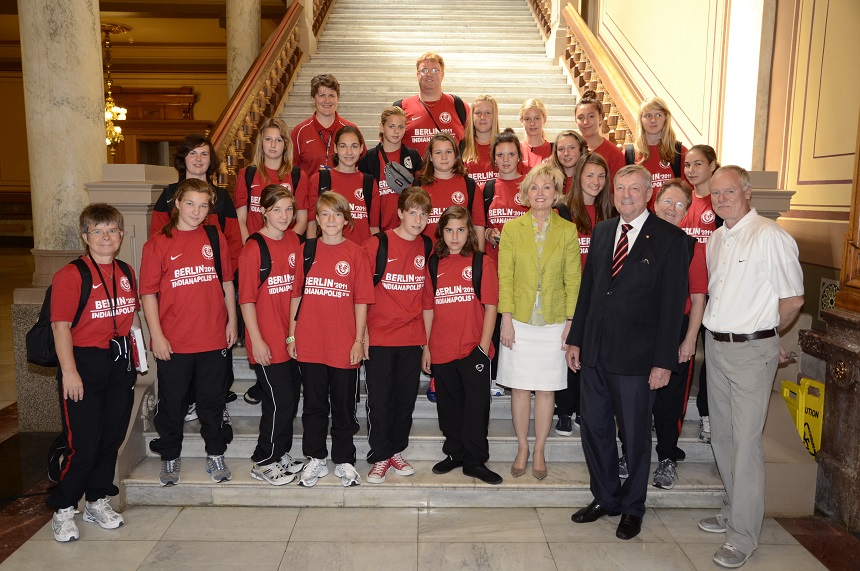
I always wanted to tell the young players that I wanted them to have the same great experiences that I had through sport. I still have fond memories of the trip to the USA with our U15 girls' team at the time. Ailien Poese, now coach of the Bundesliga women's team at Union Berlin, was still there as a player at the time. You can see from her alone how players can develop if - in addition to a certain talent - they show will and commitment and go their own way.
In 2011, Kathrin Nicklas (from left) traveled to the USA again: she accompanied the BFV U14 juniors to Indianapolis. Photo: BFV
You coached the women of 1. FC Union Berlin at a time when women's soccer was a marginal phenomenon in Germany. Today, the club, like many others, plays professionally in the Bundesliga in front of rising five-digit spectator numbers. Women's soccer has been booming for years. How do you perceive these developments?
1. FC Union was a sporting home for me and the club is still very important to me, of course. I followed the last season of the Union women with great interest and was there myself on the last matchday when the championship trophy was still at stake. Those responsible had the courage and the will to take the path to professionalization and so far their success has proved them right. Whether at Union or many other professional clubs today, we should not forget that many players and coaches in women's and girls' soccer back then laid the foundations for today's success with their passion and commitment, when the conditions were very different. When I think back to the documentary I mentioned earlier and the players' drive to never give up, these people deserve the highest recognition!
Not only female soccer, but the soccer business as a whole has developed a lot over time, for example in terms of many processes and technical innovations. What do you think is important in order to keep up with all these developments and work in line with the times, as you have done?
In the 35 years of the BFV, I have been involved in many developments, from the typewriter to the PC, which - to be honest - I didn't always enjoy. I still remember exactly how we suddenly got these new devices on our desks and then we had no choice but to just get started. Ultimately, it was my love of soccer and the tasks that were my responsibility that made it fun to deal with. And as in many situations in life, the following always applied to me: standing still is a step backwards!
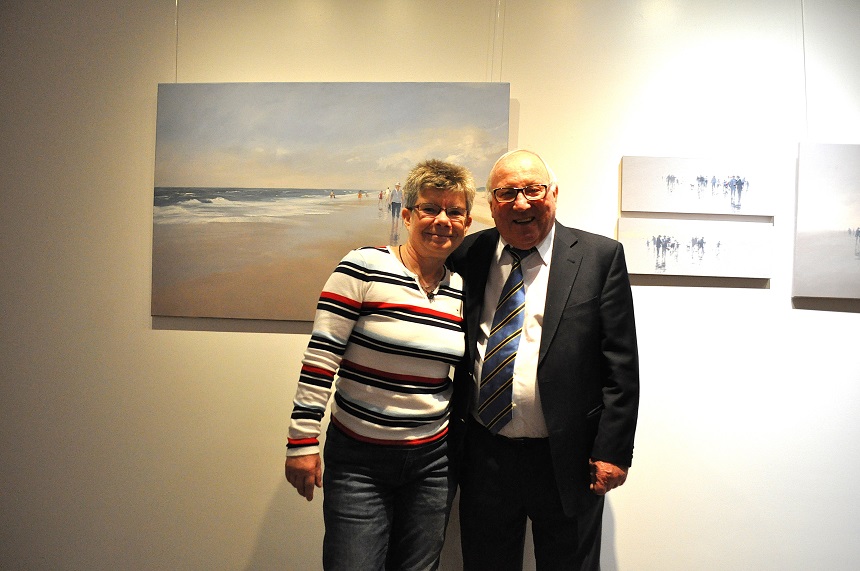
Kathrin Nicklas with soccer legend Uwe Seeler in Hamburg. Photo: BFV
Looking back, what would you describe as the best moments of your career or the most exciting people you have had the pleasure of meeting?
There are so many that it would go beyond the scope of this article. The aforementioned trip to the USA with the U15 juniors in 1999 and my trip to Cleveland in 2010 with the women's national team as head of delegation as part of my voluntary work on the DFB committee for women's and girls' soccer are worth mentioning. I was super excited back then and at the end Birgit Prinz even gave me her commemorative medal as a thank you! The 2011 Women's World Cup in Germany with the opening game in Berlin as a coach for the ball girls is without question also one of my highlights. I also had the opportunity to meet the unforgettable Uwe Seeler at a thank-you event for the DFB Volunteer Award in Hamburg. In addition, there are many other outstanding people that I have been able to meet through my work and with whom friendships have developed.
And what advice would you like to give people in soccer for the future?
Have fun in everything you do, but with the right attitude. Perhaps a little humility and gratitude are also part of it, that you are allowed to do what you enjoy professionally.
Thank you for the lovely interview, Nicki!
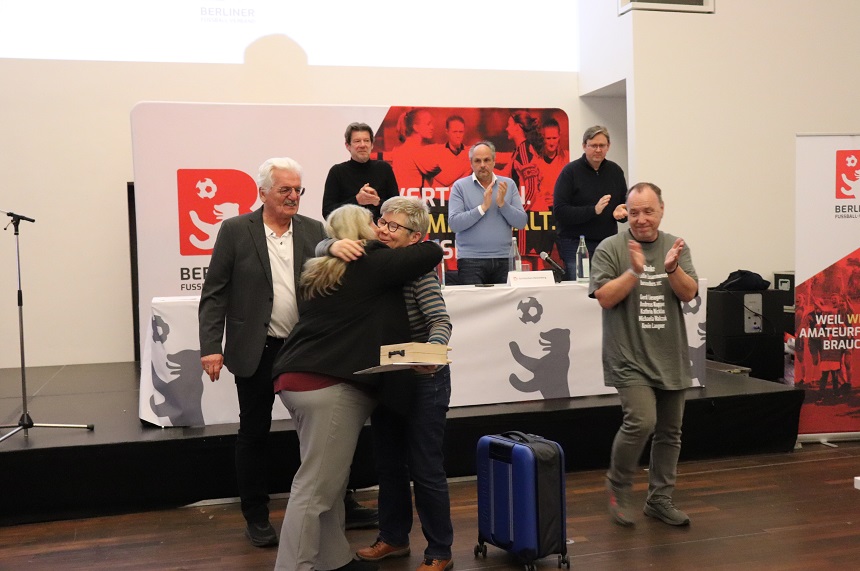
After 35 eventful and dedicated years with numerous companions, Kathrin Nicklas retired in spring 2025 at the BFV Youth Association Day. Photos: BFV / Sandra Ritschel
This website uses cookies that are necessary for technical operation and are always set. Other cookies, used to personalize content and ads and to analyze website traffic, are set only with your consent.
necessarynecessary
description necessary
cookie
duration
description
bakery
24 hours
Saves your cookie-settings.
other
description other
cookie
duration
description
OAID
1 year
Linked to the OpenX banner advertising platform for publishers. Records whether specific ads were displayed. Reportedly used only for performance tracking and not for user targeting. As a first-party cookie, it cannot be used to track across domains.
Cookies
This website uses cookies that are necessary for technical operation and are always set. Other cookies, used to personalize content and ads and to analyze website traffic, are set only with your consent.