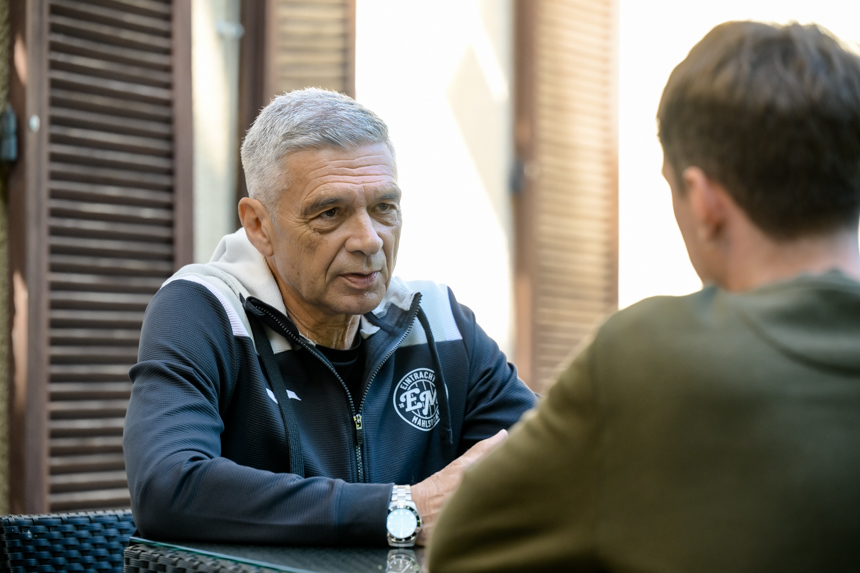
Dirk Brennecke, head of the Amateur Finals Day steering group and managing director of the Football Association of the Middle Rhine, and Ingolf Geske, one of the CvDs (Chief of Duty) of ARD-Sportschau, are among the initiators of the nationwide Amateur Finals Day, which will take place for the tenth time on May 24. They look back on a decade full of exciting developments and stories and attest to the event's promising future.
Mr. Geske, Mr. Brennecke, the Amateurs' Final Day is celebrating its anniversary. For the tenth time, the state cup finals can be seen on May 24 in a large live conference on ARD. Does the biggest amateur football event fill you as its organizers with pride?
Geske: To be honest, I was surprised the other day when I realized the time frame. I think you can be a little proud that we at ARD have been covering it for so long. We will celebrate the anniversary.
Brennecke: Above all, I feel joy when I look back on the development of the event - from the beginning, when we had to persuade 21 national associations to take part, through difficult times during the pandemic, to its outstanding status today. It is thanks to many dedicated people, for example in the steering group for the amateur final day, in the national associations and in ARD, that we have achieved this.
Who came up with the idea and what challenges had to be overcome before the first edition?
Brennecke: It all started with the ambition of Steffen Simon, then head of sports at WDR, to do something for amateur soccer. He told me that if I succeeded in bringing together the finals of the three state associations in NRW, they would be broadcast on WDR. That was the starting point. We had to adjust the match schedules and overcome many other challenges, but it worked in 2015.
But it didn't stop there.
Brennecke: No, there was the same interplay between the task and the offer for all 21 national cup finals. Steffen Simon was initially positively shocked when we got that under control very quickly. However, he kept his word and the broadcast went to the "First". For many, this development was unimaginable. After all, 21 finals had to be bundled together and the cup competitions throughout Germany had to end on the same day - regardless of the different start of the summer vacations and other formalities.
Geske: At that point, we had to develop a concept and implement it with all the state broadcasters. The two decisive numbers were nine and 21, the former representing the number of broadcasters involved and the latter the number of DFB regional associations. And together they add up to a very high level of coordination that we all had to deal with at the time. Steffen Simon ultimately convinced all the sports directors of the idea. I then became the editor who has accompanied everything since then as "Head of", but the driving forces were Steffen Simon and Dirk Brennecke. They fought the idea through.
Brennecke: We realized right away that we were passionate about the topic and wanted to make it a success. That undoubtedly applies to you too, Ingolf. It was only afterwards that I really started to learn. In the regional associations, we got to know and pay attention to the issues of television producers. In this way, the amateur final day has become a further development program for the regional soccer associations. Today we know how to master major events and use them for development. That is a great gain.
How big is the effort for "Das Erste"?
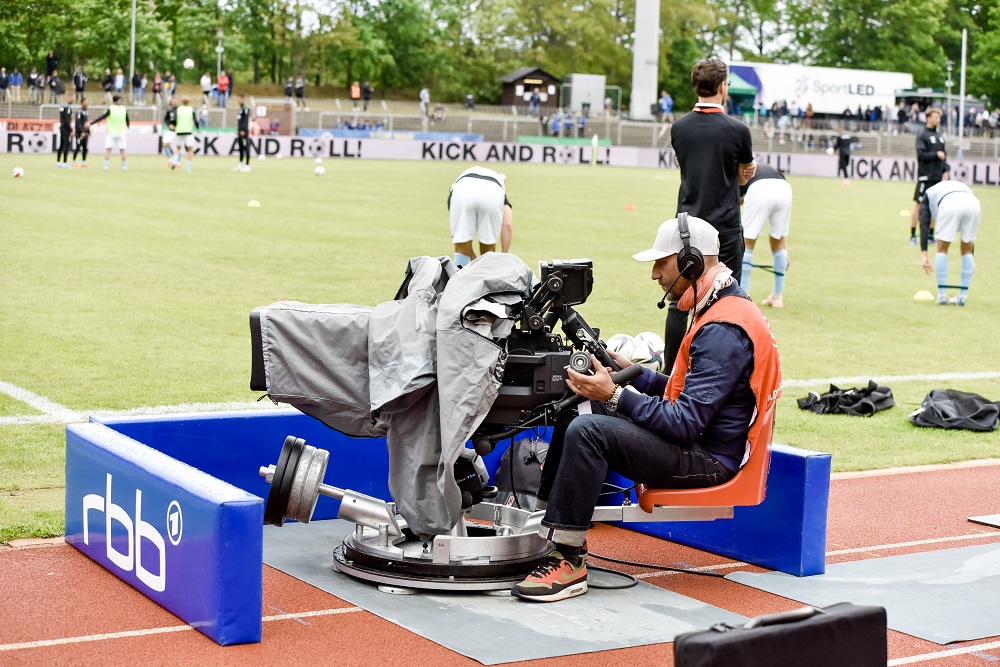
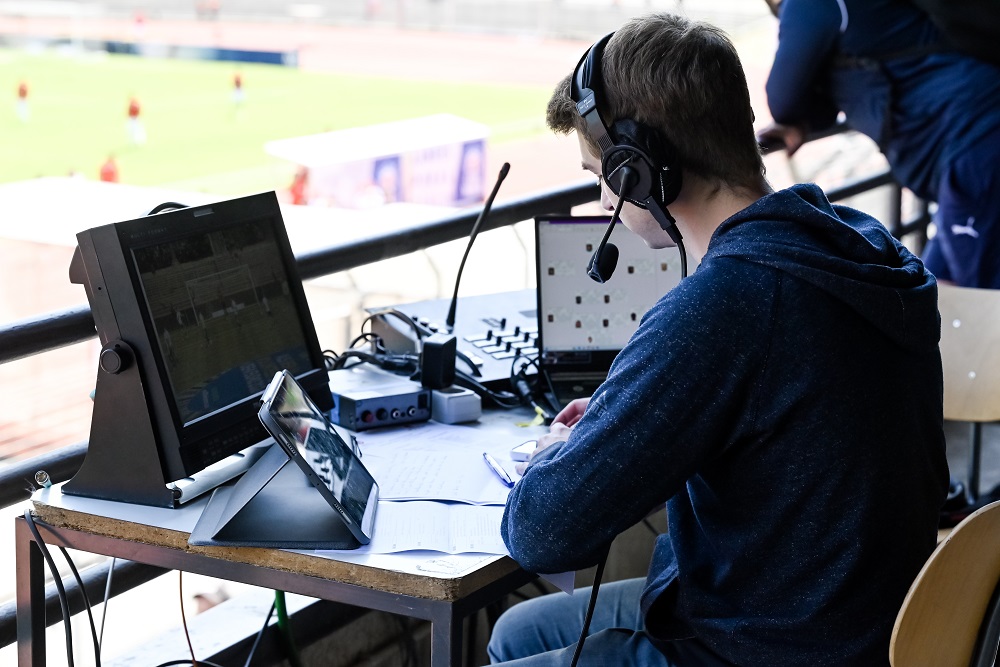
Geske: The effort is immense. With 21 finals at times, we had to equip 21 venues with OB vans and install three to five cameras each, and even more for the top matches. That means we need around 120 cameramen alone. Then there are commentators, field reporters and editors in every stadium. You reach your limits. On the other hand, it also shows the strength of the federal ARD concept that it can simply be realized at the highest level every year. That only works with a functioning team
Brennecke: If interviewees don't appreciate this effort, I always suggest writing down 21 names of ARD commentators. Most people have to give up at some point. That illustrates the scale of the event.
How has the response to livestreams and TV broadcasts developed?
Geske: The development of the TV ratings is an additional argument for continuing the event. It used to be six to seven percent market share, mind you, with seven and a half to eight hours of broadcasting time. Most recently, we were at more than ten percent over the entire time and even up to 15 percent at the maximum during prime time. That is enormous and fills the idea with life of making a difference for amateur soccer and thus offering a special platform to volunteers and the grassroots once a year.
Doesn't broadcasting all the matches take away from the clubs because fans would rather sit on the sofa than go to the stadium?
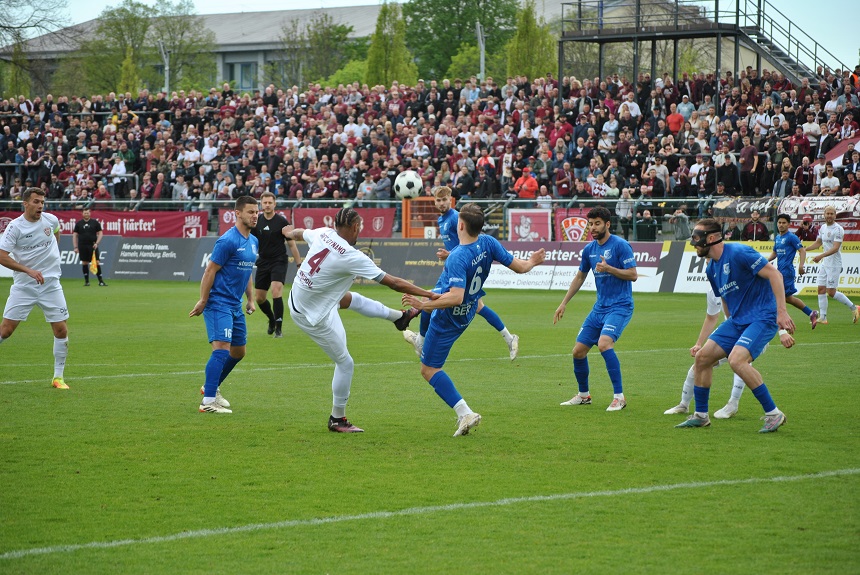
Brennecke: The opposite is the case. With the final day, we have given the cup competitions significantly more attention in the regional associations and raised their status. The stadiums are well attended, more and more often even sold out. We have received very positive feedback from clubs and players. We have created an image transfer through the intensive media coverage. And that also pays off economically in the end. The best proof of this is the acquisition of Volkswagen and the Bundeswehr as active partners throughout Germany.
On the final day, you deliberately leave the level of highly professional soccer, broadcast from comparatively small stadiums and work together with local organizers. Does that make the broadcast an adventure?
Geske: Sometimes a talent for improvisation is required. Presenter Gerd Gottlob once climbed a construction tower in Hamburg's Hoheluft stadium to commentate. Some stadiums are simply not suitable from a TV point of view because the sunlight interferes or there are no suitable places to set up cameras. We try to communicate this in advance. In Saarland, a final once took place in a very small stadium. Everything was cramped. Spectators tripped over cables several times and a main power cable was pulled. Only three of the 5:1 goals could be seen live, the others had to be shown later. Fortunately, we happened to have recorded the goals with cameras that were not affected by the power cut. We now also have concepts in the drawer for some of the stadiums that repeatedly host finals. However, there are always organizational or technical challenges, and the editorial work always starts from scratch anyway. But that's also the attraction. Tom Bartels once said that preparing for the amateur final was more difficult than preparing for a World Cup final, but at least as much fun.
Wouldn't it be easier to set a suitable, fixed final venue everywhere?
Brennecke: Some regional associations have done that, including us in the Middle Rhine region. That offers organizational advantages. However, this is not ideal for associations with a much larger area, such as the Bavarian Football Association. After all, the finals should attract an audience and therefore must not take place too far away from the home of the participating clubs. For me, two things are crucial: we have to prepare the stadiums in such a way that they exude a real finals atmosphere. Fans, players and officials must feel at the first moment that a special moment has arrived. The other aspect is to offer good conditions for television and sponsors. In my opinion, both are successful, also because nationwide partners are involved in the final day.
The images from previous matches convey this final atmosphere superbly. To what extent has there been a development over the past nine years?
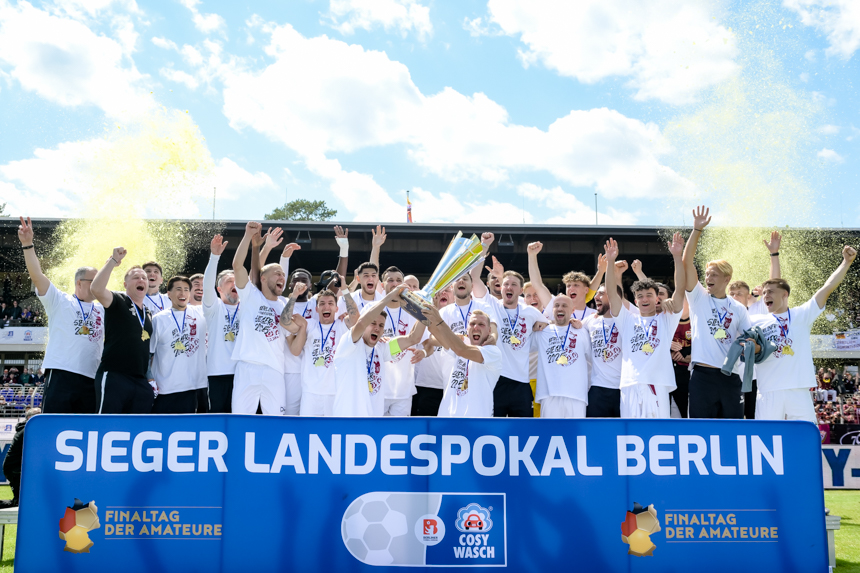
Geske: There was a sense of euphoria among the participating clubs right from the start. But one thing has changed noticeably: Seven sixth division clubs are taking part this year. That's a record! This shows the commitment with which even lower league clubs are now approaching this competition. They want a strong presence in the public eye, so nothing is given up in the course of the cup competition, but rather worked towards the highlight of the year. The amateur final day has long since become a holiday for everyone. And a springboard into the limelight with this year's preliminary highlight: state cup winners Bielefeld, whose journey began on the 2024 Amateurs' Final Day with victory against Verl, will be in the "big" DFB Cup final after the end of this year's Amateurs' Final Day!
What have been your personal highlights in the nine years so far?
Brennecke: I experience goosebump moments every year: namely, whenever I get to watch the TV trailer for the event in advance and look at the ratings the day after the games. But the highlights also include the many positive reactions and the realization that even Bastian Schweinsteiger and Esther Sedlaczek would wait a few minutes for our event.
What's that all about?
Geske: In order to be able to show the games of the final third conference in full, we were allowed a possible time buffer last year. This would have affected the two of them as a commentary duo at the evening DFB Cup final in Berlin.
Brennecke: And it is precisely this planning that shows the appreciation of the amateur final day. That was an accolade.
And what were your highlights, Mr. Geske?
Geske: I don't look at the individual event, I really enjoy the meta-level view. When I see how all ARD broadcasters and the regional soccer associations pull together and all colleagues are passionately involved, it makes the day special for me.
Is a comparable event conceivable in women's soccer or other sports?
Geske: It's already a reality. The amateur finals day has become the blueprint for "The Finals", i.e. the joint German championships of many sports broadcast on ARD and ZDF every two years.
Brennecke: We are currently considering synchronizing the semi-finals, not to show all 42 matches live, but to implement comprehensive online coverage. Technically, a final day would also be conceivable for the women's or A-juniors. However, you should always check whether a competition has already reached this stage and not go overboard.
Many soccer fans see the interplay between the regional cup finals and the DFB Cup final on the same evening as a perfect symbiosis. Will the match in Berlin between VfB Stuttgart and Arminia Bielefeld, which will be broadcast by ZDF, be a relaxed end to a busy evening for you?
Brennecke: The final in Berlin is undoubtedly the moment for both the broadcasting teams of the state broadcasters and the employees in the state associations when the efforts of their own state cup final fall away and the final of the professionals in Berlin crowns the nationwide holiday of soccer.