


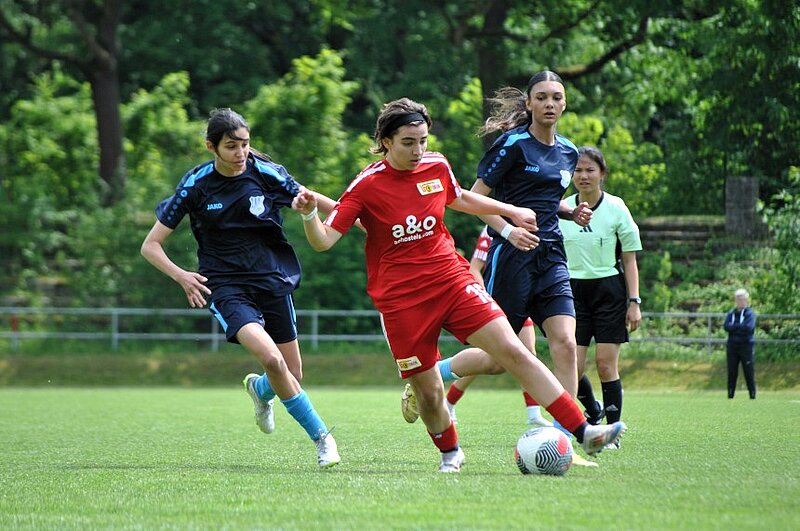

For most female soccer players in Berlin, the next step after the B-junior girls* is the transition to women’s competition*, even though some clubs have already formed teams for the new A-junior girls’ league organized by the BFV. For many players, this step comes with challenges, and adjusting to the new environment isn’t always easy.
To support outgoing B-junior girls as they transition to the adult level, it makes sense to offer them guidance from more experienced players serving as mentors. During the first few months, these mentors act as dedicated points of contact, accompany the girls to their first training sessions, and provide support with questions about everyday life on the team and at the club. The Berlin Soccer Association has compiled a guide explaining how such a mentoring model can be prepared, implemented, and evaluated.
Download the guide as a PDF: Mentoring Model for Supporting the Transition from the B-Youth Division to the Adult Division
Clubs can independently implement a mentoring model to strengthen the players’ connection to the team and the club. The model should be based on the guiding principles of voluntariness, reliability, appreciation, accessibility, and confidentiality.
The mentoring model is part of the TEAM BERLIN REPLAY strategy. The goal is to make amateur soccer in Berlin more inclusive and diverse, as well as to attract more girls, women, and inter, non-binary, trans, and agender people to soccer both on and off the field.
*When this article refers to junior girls’ and women’s leagues, it explicitly includes all FLINTA* and MINTA individuals playing in those leagues. We use the official competition names as listed on DFBnet, but otherwise strive to use language that is as inclusive as possible.

