


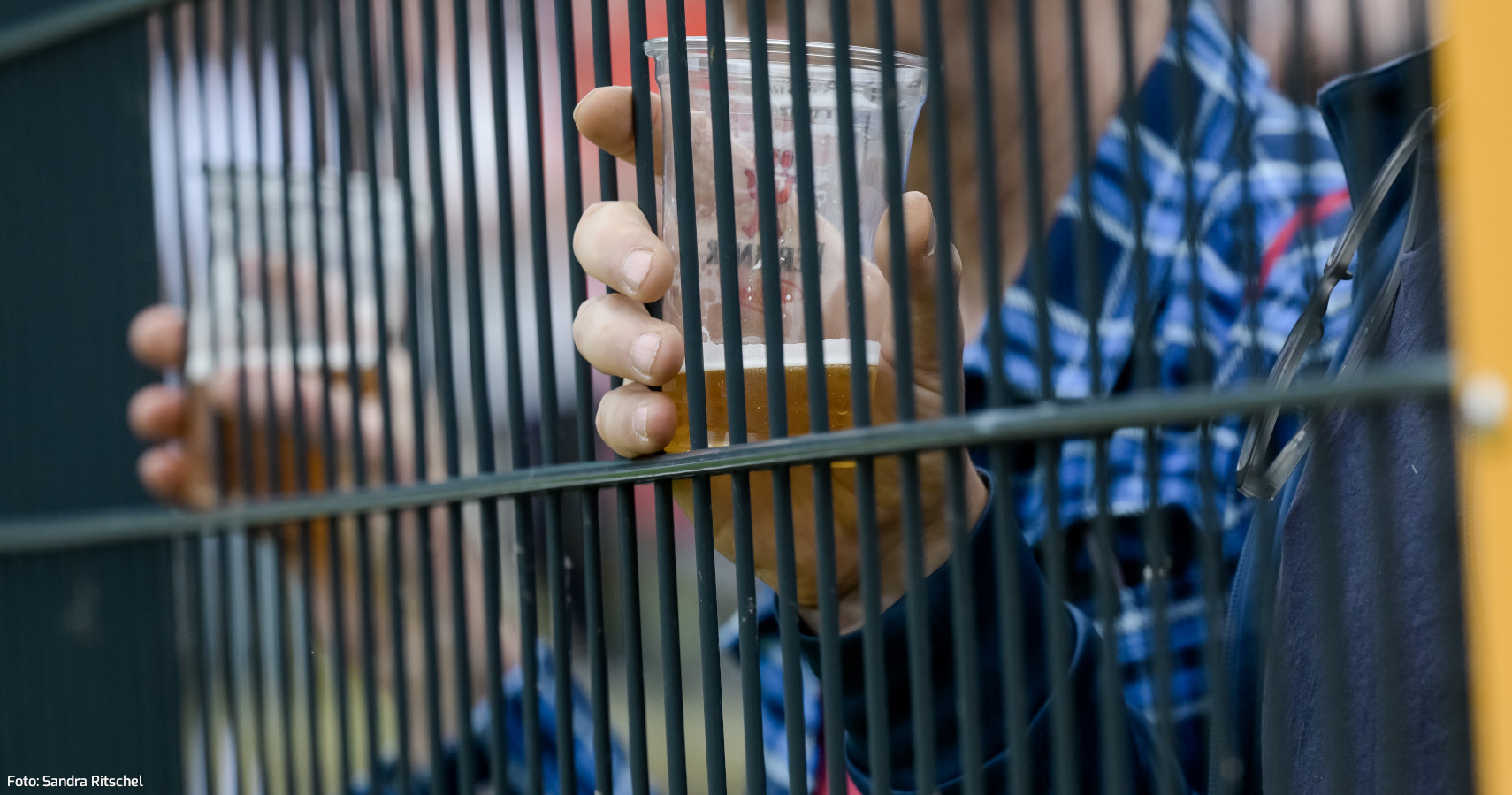

The aim of addiction prevention is to educate people about legal and illegal substances as well as behavioral addictions such as media addiction and gambling addiction in a counseling setting or in the form of seminars and workshops. The aim is to encourage people to deal with consumption and its consequences and to reflect on them in order to remove the taboos surrounding these topics. Above all, the BFV wants to sensitize young people in Berlin sports to the responsible use of legal drugs, the media and gambling.
Gambling addiction
Extrapolated to the population, 429,000 people exhibit at least problematic gambling behavior.* Active members of sports clubs have an increased risk of developing a gambling problem. Sports betting, for example, is particularly appealing to people who play sport themselves or believe they know a lot about the sport due to its connection with sporting interests.
In a survey of almost 300 people from 21 sports clubs in Bremen and Kiel, 52% of club members stated that they had placed bets on sporting events in the past twelve months, while only 3% of the general population had done so.** The figures show that sports betting is particularly appealing to young men with an affinity for sport due to its link to sporting interests. However, this form of gambling is also associated with a high potential for addiction. Furthermore, with over 400 betting agencies*** and numerous websites, the availability in Berlin is very high and represents a considerable risk of developing problematic gambling behavior.
How do you recognize gambling addiction?
A distinction is made between social gambling and risky gambling.
Social gambling usually takes place within a limited time frame with friends or acquaintances. The stakes are limited and the focus is on pleasure, variety and entertainment.
In risky gambling, the stakes and frequency increase. When losses occur, it is no longer possible to stop and the next win is intended to compensate for the losses suffered, which means that more money is gambled away than intended. Control over one's own gambling is increasingly lost. Social and professional obligations are increasingly neglected.****
When it comes to risky gambling, there is a need for action to prevent gambling addiction.


Prevention Center for Behavioral Addictions (PAD)
In 2023, pad gGmbH's gambling prevention project conducted a survey among members of Berlin's sports clubs together with the Landessportbund Berlin (LSB) to find out more about their habits and attitudes towards sports betting. The aim of the survey was to gain a more accurate picture of the role that sports betting plays in Berlin's clubs. A total of 407 club members took part in the survey. The results are not representative due to the number of cases and are subject to some methodological limitations. Nevertheless, the results from Berlin indicate a similar picture to the results of other scientific surveys.
In order to actively tackle this issue, the BFV is currently implementing a pioneering pilot project against gambling addiction in sport together with committed sports clubs. The project, initiated and carried out by the pad gGmbH gambling prevention project in cooperation with the LSB and the BFV, aims to raise awareness of the risks of sports betting and implement preventative measures. If you are interested in participating, please contact soziales@berlinerfv.de.
Sources
*
Banz, Markus (2019): Gambling behavior and gambling addiction in Germany. Results of the 2019 survey and trends. BZgA research report. Federal Center for Health Education. Cologne.
**
Zielke, Manfred; Meyer, Johanna; Meyer, Gerhard; Hayer, Tobias (2013): Prevalence of sports betting and gambling-related addictive behavior in sports clubs. A pilot study. In: Practice of Clinical Behavioral Medicine and Rehabilitation 92 (p 01), pp. 189-196.
***
Berlin House of Representatives (ed.) (2019b): (Sports) betting shops: In which neighborhoods are there too many gambling booths? Written question by Dr. Clara West (SPD) and Daniel Buchholz (SPD). Printed matter 18 / 18 464. Berlin.
****
Infoblatt_Glücksspiel Online from 18.04.2019 (Fachstelle für Suchtprävention)
Center for addiction prevention
The Berlin Office for Addiction Prevention is a long-standing partner of the Berlin Football Association. On behalf of the Senate Health Department, it has been working since 2005 to reduce the consumption of addictive substances and risky behavior in all areas of life. As a central competence center, it also develops and coordinates addiction prevention services in Berlin.
Its main task is to bundle and network addiction prevention resources in Berlin and make them accessible to everyone. For example, sports clubs can benefit from formats such as further training for teamers, parent events or information stands at sports and family festivals. This has significant added value for the target groups of the prevention measures as well as for the sports clubs:
Those who take advantage of addiction prevention offers prevent unhealthy behavior and thus make a lasting contribution to promoting the health of club members.
Coaches are strengthened in their role model function and sensitized to a conscious approach to addictive substances and behavior.
Addiction prevention supports the development of life skills and promotes the development of healthy coping strategies. Personal development measures also strengthen team spirit and social interaction in the clubs.
Clubs that use addiction prevention programs show responsibility and are perceived positively in society.
The active implementation of youth protection strengthens the trust of parents and schools.
The aim of the cooperation between the Berlin Football Association and the Berlin Office for Addiction Prevention is to help raise awareness of the risks of substances and risky behavior, reduce the consumption of addictive substances and risky behavior and enable young people to lead an "independent" life with prospects for the future.
Further information can be found here:Addiction Prevention Center
You can contact the Addiction Prevention Center (anonymously if you prefer) via the following channels:
Phone: 030 - 29352615
Email: info@berlin-suchtpraevention.de
Dealing with painkillers in amateur soccer

Taking medication to enable or enhance performance - this is an increasingly common and accepted practice in society. Painkillers are even consumed as a precautionary measure as a matter of course, as a survey on the use of painkillers in amateur soccer by the Correctiv research center shows. Over-the-counter painkillers, which are "only" available in pharmacies, are increasingly playing a special role.
Club sport is a place where children and young people learn that sporting activity has a positive effect on their well-being and physical development. However, if they observe that the willingness to take medication is virtually a prerequisite for practising their hobby at a higher level of performance, they may be encouraged early on to use their own developing bodies in a way that is harmful to their health. They do not get to know their own physical limits, pain as a valuable warning signal of the body is switched off, the risk of injury increases - apart from the sometimes considerable health consequences, e.g. in the form of heart disease, stomach and kidney damage as well as a transfer of the problematic drug consumption pattern to other areas of life.
In order to counteract this development, preventative impulses are needed as early as possible to encourage a responsible attitude towards medication and other addictive substances in sport and to reflect on the principle of "performance at any price".
Adult club members and top performers in particular have a responsibility here and are role models for children and young people. To this end, the Berlin Football Association offers the "Children and Youth Driving License" for coaches and supervisors. In the module "Addiction Prevention in the Club", the Berlin Addiction Prevention Center (Fachstelle für Suchtprävention Berlin) highlights the topic of painkillers in sport, in addition to other legal and illegal substances and risky behaviors, and discusses possible courses of action in everyday club life.
Informative links and contacts
Clubs can obtain information on the use of medication or the risks of other substances from the Fachstelle für Suchtprävention Berlin. If you would like to start or intensify prevention work in your club, please contact the specialist office at the following address:
Fachstelle für Suchtprävention Berlin
Those affected by risky or excessive drug use can contact the Berlin alcohol and drug counseling centers - contact addresses can be found here:
Regional addiction and drug counseling centers in Berlin
The "Medication information sheet" from the counseling center provides information on the effects, motives for consumption, risk groups, prevention, counseling and support services: Medication information sheet
Further information is also available from the German Center for Addiction Issues and the Federal Center for Health Education.
"Of course - stay independent!"
As a cross-sectional social task, addiction prevention must be anchored as a binding component of concepts and framework agreements in the fields of youth welfare, in schools and universities, in training centers and companies, in sports clubs and in health and social care facilities.
The state program "Na klar - unabhängig bleiben!", a strong Berlin alliance of committed partners, is committed to modern, quality-oriented addiction prevention in the state of Berlin. It is supported by the Senate Department for Science, Health and Care, the Senate Department for Education, Youth and Family, all twelve Berlin districts, the HaLT proactive and reactive project, the Berlin Police and the Berlin Addiction Prevention Center, as well as the Berlin Football Association, the Sportjugend im Landessportbund Berlin and the Berlin-Brandenburg Trade Association.
The first Berlin-wide campaign for the prevention of alcohol and illegal substances has been working successfully in the network since 2009 - it is dedicated to joint prevention activities every year and is committed to bundling the activities of various stakeholders.
Recommendations for action on alcohol prevention in sports clubs (handout for coaches)
The handout can also be ordered in analog form from the Addiction Prevention Center.
Alcohol, soccer and major events
Stadium visits, public viewing and cheering together in the beer garden are often places where alcohol is consumed excessively. At such events, soccer and heavy alcohol consumption often go hand in hand. But are soccer and alcohol really inseparable? Can you enjoy soccer without drinking alcohol? And how much alcohol is actually good to really "get more out of the game"?
Alcohol acts as a catalyst: it amplifies emotions in all directions and the joy of scoring a goal for your favorite team can quickly turn into aggression and violence when negative experiences occur. The negative effects affect those who drink while intoxicated as well as the people around them.
The youth protection poster is a clear reminder of the most important pillars of youth protection in soccer.
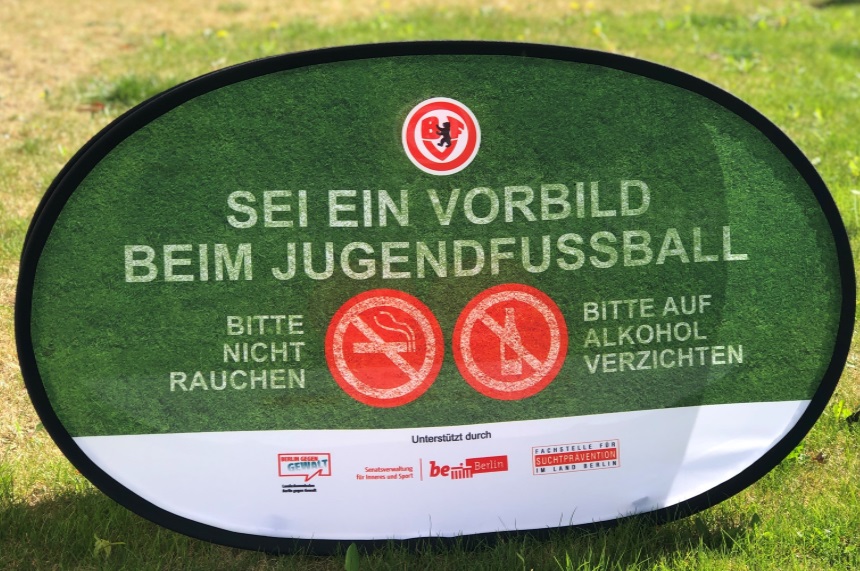
Tobacco, nicotine, alcohol and other drugs have no place on a sports field, especially at children's and youth games. This is why the BFV has launched the "Smoke and alcohol-free sports grounds" campaign. Parents, coaches, supervisors and fans should be role models when it comes to abstaining from the consumption of intoxicants.
Drinking alcohol can contribute to promoting an aggressive atmosphere and therefore does not stand for the fair play values and anti-violence work that the BFV represents and promotes. In addition, the aim is to prevent athletes, especially young players, from being exposed to cigarette smoke during their matches, which inevitably drifts onto the pitch.