


Every football club in Berlin is open to people with disabilities. In accordance with the UN Convention on the Rights of Persons with Disabilities, all Berlin sports clubs are called upon to implement the inclusion concept of the Berlin Football Association. In addition, Berlin's soccer clubs offer a wide range of soccer activities specifically for people with disabilities. This means that everyone can become part of the Berlin soccer family:
Inclusion teams
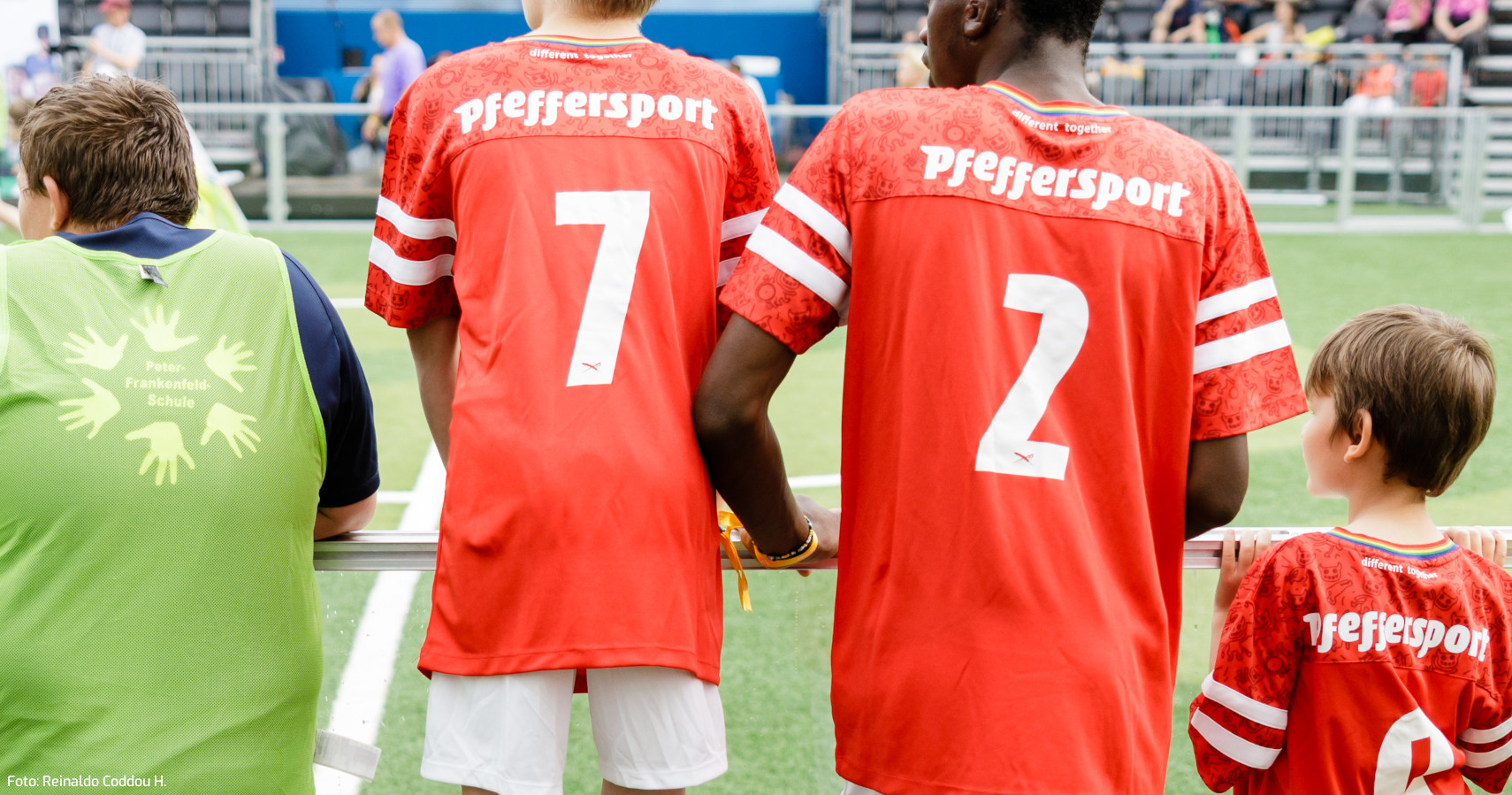
Inclusion teams - these are teams in which people with and without disabilities play soccer together without any pressure to perform, but with pure joy and enthusiasm. There are currently no competitive matches in Berlin, but there are regular friendly tournaments that focus on fun, teamwork and fair play. And there are really only winners: for the children and young people with disabilities, being able to play soccer is the greatest thing. The children without disabilities overcome their fear of contact and learn to deal with the strengths and weaknesses of others. The coaches enjoy the children's enthusiasm for soccer and the clubs have an exemplary sports program that attracts new members and generates a lot of attention. There are already several such inclusion teams in Berlin - and the number is growing.
No special training is required of the coaches. A certain degree of empathy is the basis. The training should be individually adapted so that the players without disabilities do not get bored and the athletes with disabilities are not overwhelmed.
Berlin clubs that are involved in inclusion soccer:
- Pfeffersport
- FC Viktoria 1889 Berlin
- Oranje Berlin
- BSV 1892
- Hertha 06 Zehlendorf
- FSV Forst Borgsdorf
- FSV Berolina Stralau 1901
- SV Adler 1950
- SG Handicap Steglitz
- SC Lebenshilfe
- SG Mittendrin
- Woman on the ball
Blind soccer
What is blind soccer?
Blind soccer is a type of soccer that is growing steadily in Germany and has been played in a regular Bundesliga competition since 2008. The Berlin representative has been Hertha BSC since the 2020 season. The ball - a futsal ball equipped with rattles - is guided across the pitch, passed and shot at goal with unerring skill. In addition to technical ability, good orientation and excellent communication between the players play the main roles.
The rules
In blind soccer, four outfield players who are completely blind or only have a small amount of sight play together with a sighted goalkeeper. Any visual impairment is compensated for by wearing dark glasses so that all outfield players are on an equal footing. To prevent (head) injuries, all field players wear head protection. The coach at the side and the goal guide behind the opponent's goal complete the team. The goal guide has the task of showing the striker the way to the goal by shouting and giving brief information about the game situation.
The playing field is 40x20 meters in size. The game is played twice for 25 minutes and on field hockey goals (3.66 x 2.14 meters). The long sides are bordered by boards and are actively involved in the game. Otherwise, the game is played largely according to the same rules as futsal.
In addition to fouls, which can also be punished with yellow and red cards, there are also free kicks and penalty kicks, but no offside. Compliance with the rules in blind soccer is ensured by two main referees and one assistant referee.
"Voy"
An important element of blind soccer is the Spanish word "voy" (translated: I'm coming, I'm going). The field players know where the ball is by the rustling of the ball, but not where the other field players are. To avoid collisions, the players approaching the person with the ball must repeatedly shout the word "voy" out loud.
National league for blind soccer
Since 2008, the Sepp Herberger Foundation has organized the German Blind Football League together with the German Disabled Sports Association (DBS) and the German Association for the Blind and Visually Impaired (DBSV). The match days take place at various locations in Germany on the pitches of the clubs or on public pitches and regularly delight spectators. The last match day of the German Blind Football League took place in Berlin in August 2016.
Further information on blind soccer and match operations: Blindenfußball-Bundesliga
Contact persons at Hertha BSC
Sandra Röder: 0172 8684080
Andreas Blaszyk: 0174 9699348
E-mail: Oops, an error occurred! Code: 20260528234803ff402166
Walking Football
Walking soccer is a type of soccer that has so far been considered age-appropriate and health-promoting, especially for the over 55s. However, the sport can also be considered inclusive, offering beginners and all footballers with physical or motor impairments or long-term injuries the opportunity to become part of the soccer family (again), regardless of their age.
Interested clubs can contact the Walking Football Officer Alfred Glaser for initial advice and support in establishing walking football programs: 0170-3234231 / alfred.glaser@berlinerfv.de.
Amputee soccer
What is amputee soccer?
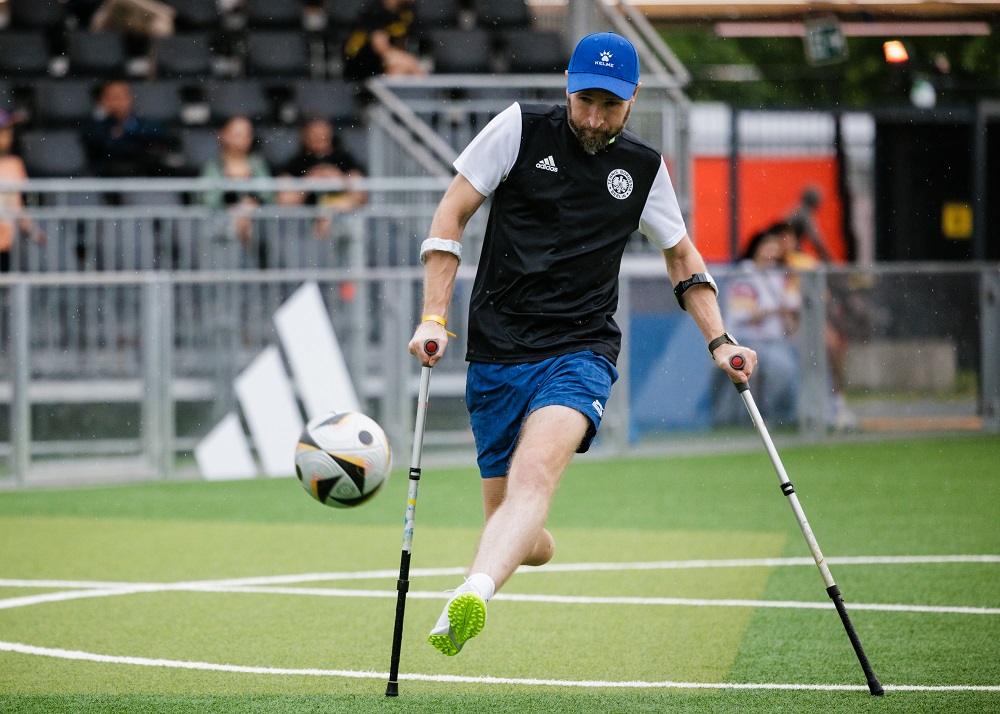
For people who have had to have a leg or arm amputated due to an illness or accident, amputee soccer has been a special type of disabled soccer in Germany since 2009. Amputee soccer can be played at four training locations in Braunschweig, Hoffenheim, Ludwigsburg and Düsseldorf. Around 30 athletes are currently active in amputee soccer in Germany. There are already organized leagues in countries such as Turkey and England. There is already a private national team that represents Germany in international tournaments.
The sport can be played by people with amputations or dysmelia (congenital malformation of one or more limbs). Anpfiff ins Leben e.V. and the Berlin Football Association are working together to establish an amputee soccer program in Berlin.
The rules
The outfield players chase the ball on metal crutches and one leg. The goalkeeper plays with both legs, but only with one arm. This creates a fast, exciting and fascinating game that captivates the spectators. Everyone can take part in amputee soccer - regardless of age, gender or nationality.
This type of soccer is basically played according to the usual soccer rules. However, there are minor adjustments: The game is played on a 51x31 meter pitch without offside with six outfield players and a goalkeeper who is not allowed to leave the penalty area. The ball may only be moved with the leg. Stopping or passing the ball with the crutches is considered a handball. Accidental, unintentional contact with the ball using a crutch is not punishable and play continues. The goal is also slightly smaller at two meters high and three meters wide. The playing time is twice 25 minutes.
Wheelchair soccer
Wheelchair soccer with its sub-forms Powerchair Football, also known as "Power Soccer" or "E-Rolli Football", and Wheel Soccer are exciting and new forms of disabled soccer in Germany. People with different physical disabilities play soccer together in a wheelchair. Neither type of soccer is currently Paralympic.
Powerchair football
The challenge in powerchair football lies in controlling the power wheelchair, as it is used to guide the soccer, pass to team members or shoot at the goal. The power wheelchair is equipped with a grid at the front to prevent the ball from getting underneath it. In principle, powerchair football can be played by anyone, but the official tournaments and leagues are aimed at people with severe physical limitations (such as muscle diseases or paraplegia) who are also dependent on the use of a power wheelchair in everyday life.
Rules
All wheelchairs can accelerate up to 10 km/h. This means that all footballers, regardless of their type of disability, have the same opportunities in Powerchair Football. The game is played on a field the size of a basketball court and with a special ball that has a diameter of 33 cm. A team consists of three outfield players and a goalkeeper. The duration of the game varies between twice 15 and twice 20 minutes. A special feature of this type of soccer is the so-called "two-on-one rule" (also known as "two-on-one offense"). This states that only one player of the defending team may be within three meters of the player with the ball. This is intended to encourage one-on-one duels.
The complete set of rules can be found here: Powerchair Football rules
Playing the game
Powerchair football is already played in many countries around the world. International tournaments are also held, organized by the Fédération Internationale de Powerchair Football Association (FIPFA). Powerchair football is also on the rise in Germany. The first Powerchair Football team was set up at the Saxon club SV Motor Mickten-Dresden e.V.. There are now four teams playing throughout Germany. In addition to the Dresden teams Power Lions Dresden and Power Cats Dresden, Bonner SC and the current German champions BMTV Barmstedt Knights are also active. The Bundesliga is set to grow further with the formation of additional teams and the prospect of a national team. A club is also being sought in Berlin to provide a sporting home for powerchair football.
Further information on the Bundesliga and contact persons: Powerchair Football Bundesliga
Wheel Soccer
This soccer variant has been played in Berlin for over ten years and reaches its annual climax in the nationwide Wheel Soccer Cup, which is organized by Pfeffersport and supported by the Berlin Football Association.
The rules
The game is played with four outfield players and a fixed goalkeeper on two two-meter goals on a basketball court. A large exercise ball/pezzi ball is hit or kicked with one hand or with a wheelchair. The ball must be in contact with the ground at all times. A goal is scored when the gym ball rolls over the opposing team's goal line. There is a goal area through which the field players are not allowed to pass. The goalkeeper is also the only player allowed to touch the ball with two hands. Furthermore, each team has a maximum of two so-called "bonus players" with a more severe impairment. These players may also play the ball with their feet and may not be attacked by opponents.
Match operations
There is not yet an official game in Germany.
Rollator soccer
What is wheelchair soccer?
Rollator soccer is a type of soccer developed for people who use a rollator. The sport originally comes from Great Britain (frame football). Wheelchair soccer offers an opportunity for all participants to meet, interact, network, exercise and learn social skills. It also creates a framework in which athletes with similar abilities can compete in a sporting competition or even be part of a sporting competition.
The rules
The ball may be played with the foot and the rollator. However, players should be encouraged to use their feet. The dimensions of the pitch and the type of balls and goals used are very variable. In most cases, the game is played on a 30x40 meter field, which is bordered by outlines. However, the length can vary between 25 and 50 meters and the width between 15 and 35 meters. It can be played on short artificial turf pitches, tartan or preferably on indoor surfaces. Usually soccer balls of sizes three or four or light futsal balls are used. Mini goals, indoor soccer goals or handball goals are also suitable. The number of players is five per side, but this can be adjusted depending on the size of the pitch. The playing time is twice 20 minutes.
As there is no regulated game system yet and the number of active players is still very low, especially in Germany, the game is played in age groups from five to eleven, from twelve to 16 and from 16 years of age. Coaches must take the age and type of impairment of the individual players into account when organizing training sessions. It is particularly important to note that people with cerebral palsy tire quickly, which is why sufficient breaks and short training intervals must be planned.
The rules of wheelchair soccer are based on indoor soccer. It is played without offside, goals can be scored from any position (even from the player's own half) and after the ball has gone out of bounds, it is passed in. Contact between rollators is permitted, but coaches are required to ensure the safety of the players and to teach fair play.
There is a special rule that is also used in other sports for people with disabilities: the "two-on-one rule" or "two-on-one offense". This rule states that only one player on the defending team may be within three meters of the player with the ball. This is intended to encourage one-on-one duels.
Wheelchair soccer is played on special sports wheelchairs that meet the special requirements for precision and stability and differ from everyday wheelchairs. They are wider and therefore offer more stability at higher speeds, better ball control and also better tackling.
CP soccer
What is CP soccer?
CP soccer, also known internationally as "Football 7-a-Side", is a sport for people with brain damage and the resulting movement disorders. The sport has existed since 1978 and was a Paralympic sport from 1984 to 2016. The term cerebral palsy (Latin cerebrum = brain, Greek paresis = paralysis) covers various forms of movement disorders that occur as a result of damage to the central nervous system. A distinction is made between early childhood brain damage and brain damage acquired in the course of life as a result of trauma or illness (e.g. stroke or traumatic brain injury).
Germany has had a national CP soccer team and individual state teams since 2014. Further selection teams and the formation of five bases are being planned in order to promote the nationwide development of CP soccer. The ZNS - Hannelore Kohl Foundation, the Sepp Herberger Foundation and the German Disabled Sports Association (DBS) in particular are supporting the development of the structures.
There are no separate clubs for footballers with cerebral movement disorders. Most of the players play their favorite sport in a regular soccer club. Many players have therefore not yet heard of the CP national team and have therefore not recommended themselves for a place in this team.
Rules
The rules of CP soccer are based on the FIFA rules. Six outfield players and one goalkeeper per team play on a pitch 70 to 75 meters long and 50 to 55 meters wide on youth goals (5x2 meters). The game lasts 60 minutes and is divided into two halves of 30 minutes each with a 15-minute half-time break. There is no offside rule, but the back pass rule is applied. Throw-ins can be thrown in or rolled in. For free kicks, the distance from the wall is seven meters. There may be three substitutions.
A general classification system developed by the CPISRA (Cerebral Palsy International Sports and Recreation Association), the umbrella organization for athletes with cerebral palsy, applies to national and international competitions. Athletes with cerebral palsy are eligible to play according to the CPISRA starting categories FT1 (more severely physically impaired), FT2 and FT3 (minimally physically impaired). There must always be at least one player per team in the FT1 category on the pitch. If this is not the case, the team must play with only six players. In addition, each team may only field one FT3 player. This is intended to ensure that the physical starting conditions of the teams are as comparable as possible and that all athletes - especially those who are physically weaker or more severely impaired - receive playing time.
Annual soccer weekend for people with craniocerebral injuries
Every year, the ZNS - Hannelore Kohl Foundation, which is committed to helping people with traumatic brain injuries, organizes a soccer weekend for people with traumatic brain injuries in cooperation with the DFB Sepp Herberger Foundation. The focus of the event is not on performance, but on fun, team spirit and fair play. Participants can exchange ideas with each other, take part in soccer training sessions and attend workshops with tips on dealing with cerebral palsy. The highlight of the weekend is usually a visit to a Bundesliga match.
Further information on the soccer weekend: ZNS - Hannelore Kohl Foundation
Contact person
Conny Frank Fritsch
Head coach of the national CP soccer team
Tel.: 0176-61198786
conny.fritsch@cp-nationalmannschaft.de