/ Referees

"We want to further improve the quality of the courts."

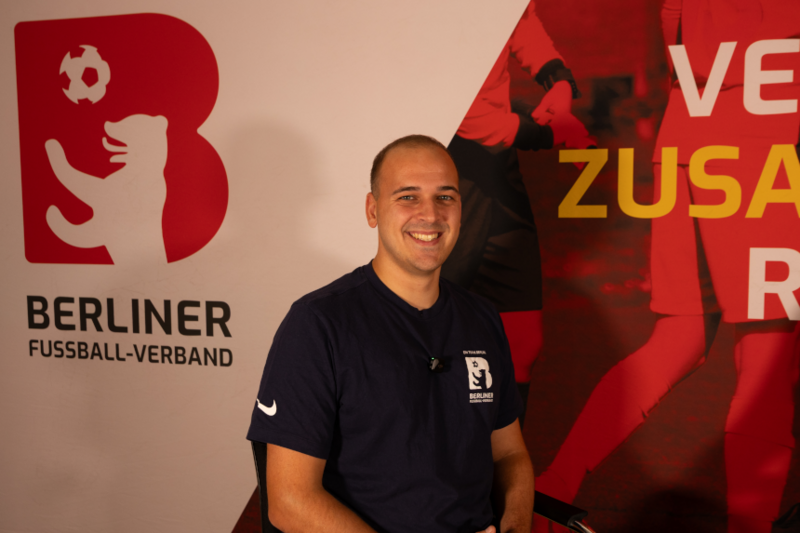
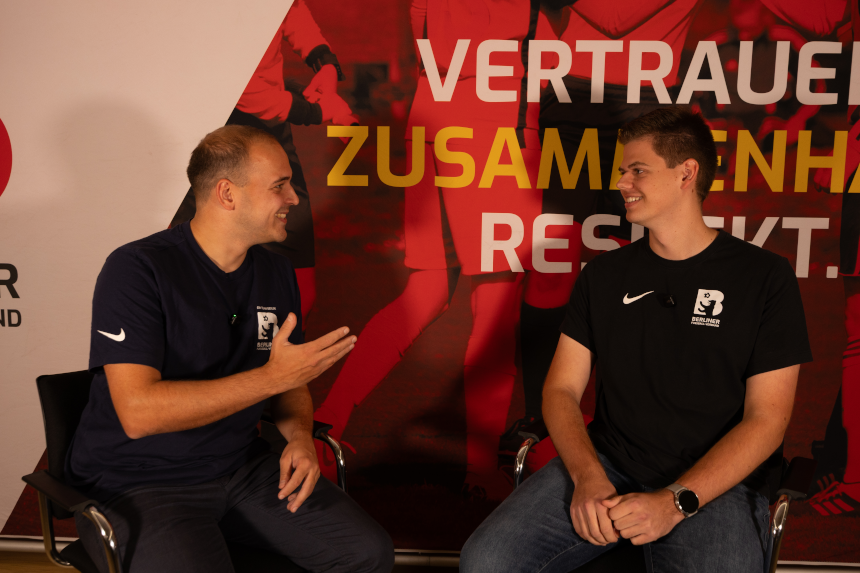
David Dahlhaus was elected chair of the Referees’ Committee at the General Assembly of Referees on September 19, 2025, and nominated as a member of the BFV Executive Committee. The regular association meeting on November 22, 2025, subsequently confirmed him in these roles, making him currently the youngest chairperson of the referees’ committees among the various DFB regional associations. The 30-year-old has been refereeing for BSV Eintracht Mahlsdorf since 2012. In an interview with the BFV, he looks back on his first year as committee chair and explains which projects his team has already advanced and what changes he still hopes to see in the future.

A detailed video about the updates to the Berlin Referee Portal is also available on YouTube: Becoming a Referee in Berlin: What’s New | BFV Talk

Hi David, at the end of 2025, you were elected chair of the Referees’ Committee and a member of the BFV Executive Committee. How do you look back on your first year in this role?

First, we had to familiarize ourselves with the responsibilities. We had to find our place within the new team structure and then get up to speed with the work processes and establish them. It wasn’t easy, but I have a great team and wonderful members on the Referee Committee who support me and are highly motivated. I’d therefore like to express my sincere thanks to everyone who is committed to supporting Berlin’s referees—both here on the committee and within the clubs. There are so many volunteers who devote an enormous amount of their time to this. Without you, none of this would be possible!

What specific issues have you tackled since taking office?

One major issue is the beginner training courses. We’ve noticed that there’s a shortage here—we receive many applications but can’t accommodate them all. That’s why we’ve revamped the application process and are working to modernize the courses and make them more efficient. In addition, we’ve reestablished the support initiatives division within the Referees’ Committee. Previously, the topic of support was integrated into our working groups; now, this area is organized as a separate unit. We hope this will enable particularly talented referees to network more effectively and receive better individualized support, allowing them to advance to higher leagues more quickly. At the same time, we can also give greater attention to grassroots referees using our other resources.

In recent years, the number of active referees in Berlin has risen slightly but steadily to over 1,200. How do you assess this trend?

The trend is positive. Hosting the 2024 European Championship in our own country has certainly contributed to this trend. When soccer is prominent in the media, we also see a greater influx of referees—or those who want to become referees. Our goal now is to ensure consistency so that enrollment numbers remain high. To do this, we need a robust and transparent training system and the support of our clubs in mentoring the candidates.

Interest in the beginner’s courses for referees is high. A bigger challenge is the dropout rate in the first few years. How are you addressing this?

Even before training begins, we want to set realistic expectations for candidates regarding what to expect as referees. To this end, we’ve introduced informational sessions that must be completed in advance in order to register for a course. Even after successfully passing the final exam, we plan to provide even closer support to newcomers in the future. Guidance from more experienced referees acting as mentors during their first games is a key component of this. At the same time, we are planning to make attendance at the monthly training group sessions mandatory during the first year. This is simply an efficient way to continue learning and stay up to date on the current rules.

In the past, beginner courses often filled up quickly, so you’ve adjusted the application process. How does it work now?

Previously, course registration worked on a “first-come, first-served” basis, meaning that whoever signed up first usually got a spot. Now we’ve introduced a points system for assigning spots. This system takes into account how many referees the club is required to provide, how many it already has, how many are in training, how many course spots were filled within the past year, and whether there is a shortage. Based on the points, we create a ranking list according to which the spots are allocated. This creates a balance between smaller and larger clubs and is significantly fairer than in the past. However, the reality is that we’ll also need to offer more training courses in the future if demand continues to grow at this rate. But that’s only possible if we can organize these courses in a way that covers our costs—which they currently do not.

It’s also important for the clubs to have an overview of which of their members are currently training to become referees.

That’s right; club representatives have frequently brought this up with us in the past, and we’ve addressed it. With a club account on the Berlin Referee Portal, clubs can now see all of their referees and candidates at a glance. The portal automatically notifies registered clubs about new registrations by their members as well as the current status of their training.

Your term as a member of the BFV Executive Committee runs until 2029. What do you hope to accomplish by then, and what changes would you like to see for Berlin soccer?

I hope that we all come together more—both clubs and referees—and that we can once again foster a greater sense of community—and I believe we’re on the right track. I also hope to further improve the quality on the fields, among other things through mandatory participation in training groups and improvements to the courses for newcomers. I’d also like to establish a culture of learning from mistakes that motivates everyone to learn and grow individually. Finally, I hope we can improve the conditions on and around the field for our referees to make officiating more appealing and keep newcomers in the sport longer. Our goal is to actively support referees and recruit as many as possible to officiate on a long-term basis. This will also include transparent and practical minimum match requirements in the future.

What qualities are important for the role of a referee?

A certain sense of fairness doesn’t hurt. It also helps to be decisive and communicative. A basic understanding of soccer and a certain level of fitness are also part of it. Ultimately, though, it has to be fun, of course.

Why do you enjoy it?

You get to be involved with soccer, stay in shape, and—especially as a teenager—you even earn a little pocket money for it—I personally think that’s fantastic. Plus, you learn a tremendous amount that you can also use in your career: teamwork, strong communication skills, and the ability to make decisions. Being a referee really does always look good on your resume. Plus, you get to meet a lot of great people—the referees themselves, but also the people at the clubs, the players, coaches, and officials. It’s a big community.

Become a referee now!

View the current organizational chart of the Referee Committee

Similar articles